How to Start a Mobile IV Therapy Business.
The Complete 2026 Playbook. 

Everything it actually takes to build a profitable mobile IV therapy company; the legal setup, the startup costs, the pricing, the marketing — laid out step by step. No fluff. No gatekeeping. Built by the team that’s generated over $100M for mobile IV businesses across the country. 

$100M+ generated · 88,000+ booked appointments · 200,000+ dispatched calls · 55+ operators launched 

The Mobile IV Opportunity

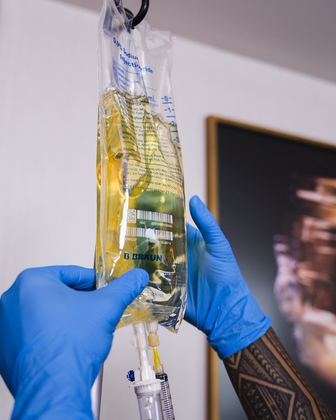
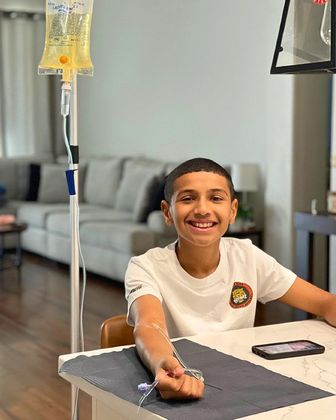
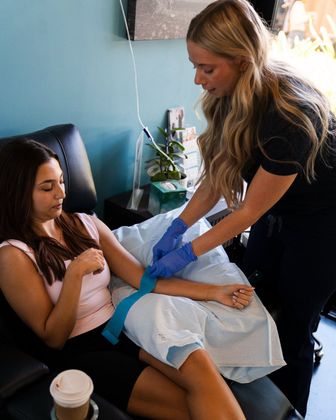
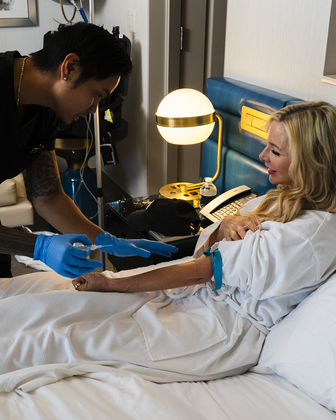
You've probably noticed the IV bags showing up everywhere. In hotel rooms after a long Vegas weekend. In the gym after a hard training block. In the offices of executives who don't have time to feel run down. What used to live only in hospitals is now a booming mobile industry across the United States, and it's growing faster than almost anything else in wellness.

Here's the part most people miss. We are still so early.


The U.S. mobile IV therapy market sat around $600 million in 2025 and is on track to double to somewhere between $1 billion and $1.7 billion within the next ten years. That's more than 10% growth every year, over twice the pace of the broader IV market. And the whole thing lives inside a $6.8 trillion global wellness economy that's expected to reach $9.8 trillion by 2029.

And it's still wide open. The market is split across an estimated 3,500 to 5,200 active operators, with no single company owning it. That means there is room for you in your city right now.


If you're a nurse, paramedic, NP, or physician, you already have the most valuable piece. If you're a business owner or a med spa operator looking to add mobile IV, you can build the rest around a clinical team. Either way, you are exactly who this page is for.


This page gives you the entire map. The full community, where we hand you the templates, the contracts, the vendor list, and walk it with you step by step, is the free Skool group below. Let's get into it.


One honest flag: your original opened by calling it a "$1+ billion" industry, then two sentences later cited the 2025 figure at $568 to $628 million. Those contradicted each other, so I swapped the opening to "booming" and let the real numbers carry the weight in the stats line. Same punch, no number that fights itself.

$1B+

U.S. mobile IV market by 2030 

10.4% 

Annual growth of the mobile segment 

70–92% 

Gross margin on a standard drip

3–6 mo

Typical time to break even 

Why demand keeps climbing 

 Wellness is now a normal part of life. In one survey, 78% of people said they planned to buy new wellness services. And 71% said they were happy to pay $100 or more for each visit. Mobile IV therapy sits right in the middle of this shift. Here is what is driving it:

People want things easy. You can order almost anything to your door now. Care that comes to you, with no waiting room and no long drive, is the next step people expect.

The NAD+ and longevity boom. NAD+ IV drips are the fastest-growing service in the space, growing more than 15% a year. Some visits sell for a few hundred dollars. Others go past $1,500.


The GLP-1 wave. Millions of people take Ozempic and drugs like it. These drugs can leave you dried out and sick to your stomach. IV fluids with B vitamins help you feel better fast. The drug is never given through an IV. The IV is only there to support you.


Events, hotels, and recovery. Weddings, bachelorette weekends, big work events, and festivals all keep mobile IV teams busy. Sports recovery is booming too. Those bookings grew 155% in just one year.

Every one of these keeps mobile calendars full and gives you more ways to earn in your city.

The economics are unusually friendly 

Here is the part that turns heads. The supplies for a standard Myers' Cocktail cost about $18.77. That covers the bag, the tubing, the catheter, the vitamins, all of it. That same drip sells for $150 to $275. Even after you pay your nurse, your medical director, your insurance, and your marketing, a well-run mobile IV business keeps 20 to 40 cents of every dollar as profit.

So what can one nurse and one vehicle really bring in?


Run 4 to 6 visits a day at an average price of $225 to $275, and one busy route can pull in about $340,000 to $580,000 a year. A solo nurse who owns the business often takes home $70,000 to $120,000 or more after all the bills are paid.

The 9 Steps to Building a Mobile IV Therapy Business 

Below is the whole roadmap, start to finish. Read it top to bottom and you will know more about this business than 90% of the people who jump in blind and get shut down six months later. This is the "what" and the "why." Inside the community, we give you the "how." That means the real templates, contracts, scripts, and vendor list. And we walk each step right beside you.

  • Step 1 — Get clear on your model and your market

    Before you spend a dollar, decide what you’re building. Are you a solo nurse-operator running your own appointments? A business owner building a small team of contract nurses? A med spa adding mobile as a new revenue line? Each path changes your costs and your legal structure. 


    Then look at your city. The biggest hubs — Las Vegas, Scottsdale/Phoenix, Miami, Los Angeles, Austin, Nashville, NYC — are proven, but also crowded (NearbyIV). Plenty of mid-size cities have almost no real competition. The fragmentation of this industry is your opening. 


    Inside the community: our market-scoring worksheet to rank your zip codes by demand, competition, and income before you commit. 

  • Step 2 — Set up the RIGHT legal structure (where most people get it wrong)

    This is the single most important — and most misunderstood — part of the business. You usually cannot just open a regular LLC and start sticking needles in arms. Because IV therapy is the practice of medicine, most states require a special entity and restrict who can own it. 


    The plain-English version: a standard LLC is great for a normal business but in most states cannot legally deliver medical care (it can serve as your non-clinical management company). A PLLC is an LLC for licensed professionals, available in about 30 states, usually owner-must-be-licensed, and not available in California (SmartAsset). A PC (Professional Corporation) is required in states like California and Maryland (Bay Legal). A PA is a Texas option (Endereza Law). 


    Then there’s CPOM — the Corporate Practice of Medicine doctrine. In many states (California, Texas, New York, New Jersey, Illinois, Massachusetts, Nevada, Oregon and others) a non-physician cannot own the medical entity (MedPath Compliance). The legal way around it is the MSO model: a physician owns the clinical "friendly PC," and you own a management company handling everything non-clinical under a management services agreement. It’s how most multi-owner IV businesses are legally structured. 


    Inside the community: a state-by-state breakdown, the MSO/friendly-PC explainer in detail, and attorney-informed templates so you set this 

  • Step 3 — Find your medical director

    Nearly every mobile IV business needs a medical director — a licensed MD or DO who writes your standing orders and protocols, oversees clinical quality, and is available for escalation. They do not have to be on-site for every appointment, but they can’t be a name on a piece of paper either — state boards have cracked down on "paper medical directors" (The Drip Map). 


    Expect a flat monthly retainer — roughly $500–$1,500 for a light arrangement, $2,000–$5,000 for the real-oversight relationship most operators use (Deelo.ai). Never pay a medical director a percentage of revenue — that can violate anti-kickback and fee-splitting rules. 


    Inside the community: exactly where to find a medical director, what a clean agreement looks like, and what to pay. 

  • Step 4 — Know who can legally start the IV

    Scope of practice trips people up constantly. RNs can administer IV therapy but cannot prescribe — they work off the medical director’s standing orders. NPs/APRNs can both prescribe and administer in full-practice states. LPNs are restricted in many states (Ohio prohibits IV push entirely). Paramedics are not authorized to run elective wellness IVs in most states — the most common and most dangerous misconception in the industry. 


    Every patient also needs a Good Faith Exam (GFE) before treatment — usually handled by telehealth against the medical director’s standing orders (compliance reference). 


    Inside the community: the telehealth GFE workflow and the staffing model that keeps you compliant as you grow. 

  • Step 5 — Source your supplies and build your menu

    You’ll need two kinds of supplies: the clinical disposables (IV bags, tubing, catheters, syringes, sharps containers, gloves, tegaderm) and the vitamins and compounds (B-complex, B12, vitamin C, magnesium, glutathione, NAD+, anti-nausea meds). 


    The vitamins and compounds come from compounding pharmacies — names like Olympia and Empower — and you need to understand 503A (patient-specific) versus 503B (outsourcing facility) pharmacies to buy legally. Cold-chain storage and shelf life matter; some compounds must stay refrigerated and many mixed bags must be used within hours. 


    Your menu is your product. The proven sellers: Basic Hydration ($99–$149), Myers’ Cocktail ($150–$275), Hangover/Recovery ($149–$295), Immune ($149–$295), Beauty/Glutathione ($175–$350), and NAD+ ($299 up to $1,500+) (Mobile IV Medics). Add-ons — B12 shots, glutathione pushes, extra bags — are where a lot of the margin lives. 


    Inside the community: our vetted vendor list, the exact starter menu with pricing, and the add-on strategy that lifts your average ticket. 

  • Step 6 — Get insured and compliant

    Insurance is non-negotiable. You’ll want professional liability/malpractice ($1M/$3M is standard, ~$1,500–$4,000/yr per RN), general liability, and — critically — commercial auto, because personal auto policies usually exclude business use (CarePro Insurance). Add cyber liability for HIPAA and workers’ comp once you hire employees. 


    You’ll also handle medical waste disposal (sharps), HIPAA compliance for patient records, and any state health care clinic license your state requires. Budget $3,000–$10,000/year for proper coverage. 


    Inside the community: the compliance checklist and the insurance providers that actually understand mobile IV. 

  • Step 7 — Build your lean tech stack

    You don’t need enterprise software to start. A lean, proven stack runs about $130–$300/month for a solo operator: booking/scheduling (Jane App, Acuity), charting/EHR, telehealth for the Good Faith Exam (GoodFaithExams.com, Qualiphy), payments (Stripe), patient texting (Spruce), email marketing (Klaviyo), and call tracking (CallRail) so you know which marketing actually works. 


    Inside the community: the full stack setup, integrations, and the dispatch system we use to run nurses efficiently.

  • Step 8 — Get customers (this is the real job)

    Here’s the honest truth: this is a marketing business that happens to deliver IV therapy. The operators who win are the ones who get found first. Your core channels: Google Business Profile + local SEO (ranking in the Google Map pack for "IV therapy near me" is the highest-leverage thing you can do), Google Ads (acquisition costs commonly $20–$80 when run well), partnerships (hotels, gyms, wedding planners, event companies, corporate offices), social media (the "drip aesthetic" and short-form video drive discovery), and reviews and referrals as your flywheel. 


    This is exactly the muscle our team has built at scale — 88,000+ booked Google and Facebook lead appointments and counting. 


    Inside the community: the local SEO playbook, the Google Business Profile ranking system, ad templates, and the partnership outreach scripts. 

  • Step 9 — Launch, then scale

    Be honest about the timeline. Realistically it’s 2–6 months from idea to your first paying customer, and Year 1 is a 50–70 hour-a-week job, not passive income (startup guide). But the path is clear: start solo, prove the model, then add contract nurses, then add vehicles and markets. 


    Recurring memberships ($169–$399/month) smooth out your cash flow — at some concepts memberships are 40–60%+ of revenue (franchise data). 


    Inside the community: the dispatch and hiring systems, the membership model, and the scaling roadmap we’ve used to help operators grow. 

Startup Costs by Business Model

No one gives you straight numbers, so here they are. Your startup cost depends entirely on your model: 

Model Realistic Startup Range Break-even
Bootstrap (solo nurse, personal vehicle) $8,000 – $25,000 3–6 months
Standard launch (most operators) $20,000 – $50,000 3–6 months
Premium (branded van, multi-nurse) $75,000 – $150,000 3–9 months
Full clinic / franchise $150,000 – $485,000+ 9–18 months

 The real number for most people: $20,000–$50,000. And here’s the comparison that matters — an IV therapy franchise will run you anywhere from $142,000 to over $1.3 million all-in, plus ongoing royalties of around 7%, and you’ll be locked into their brand and their rules (FranDB, Franchise Chatter). Even the biggest franchise, Restore, closed 29 locations in 2024 and is facing franchisee lawsuits. 


You can build your own brand — one you own 100% of, with no royalties and no permission needed — for a fraction of that. That’s the whole point. 

Joseph Lopez

Owner & CEO

Built in the trenches

Most of the people teaching this have never actually run it at scale. Joe Lopez has. 


Joe is the founder of OMG Marketing and the operator behind a portfolio of mobile IV therapy brands across the country. He didn’t read about this business in a course. He built it from zero, made every mistake there is to make, and then turned it into a system. 

$100M+ 

generated for mobile IV businesses 

88,000+ 

booked Google & Facebook appointments 

200,000+

calls dispatched to nurses 

55+ 

operators helped to build their own companies 

The story 

Joe started out the same way most people reading this will — one nurse, one city, a lot of unknowns. One of his early companies went from $0 to $2M in its first 12 months, merged with a competitor, and scaled past $10M, with a later venture hitting $250K/month within three months (documented operator journey). Along the way he became one of the most data-driven operators in the space — building the dispatch systems, the SEO playbooks, and the marketing engines that other operators now pay to learn. 


Now he’s opening the playbook. After helping 55+ operators build their own companies one-on-one, the goal is bigger: to give beginners, current operators, and healthcare professionals everything — start to finish — inside one community. 

“I’m giving away the map because the people who win in this industry aren’t the ones who hoard information. They’re the ones who execute. I’d rather build the biggest community of real operators in the country than keep this to myself.”

— Joe Lopez

Everything You Just Read — Done WITH You 

This page gave you the map. Inside the free community, you get the vehicle, the GPS, and a guide who’s driven the road 55+ times. Here’s what’s waiting: 


  The complete start-to-finish build system — every one of the 9 steps with the actual how-to 

  Legal & entity templates — LLC/PLLC/PC guidance, the MSO/friendly-PC model, medical director agreement frameworks (state-by-state) 

  The vetted vendor list — where to source supplies, compounds, and equipment without overpaying 

✓  The proven service menu & pricing calculator — so you price for profit from day one 

  The local SEO & Google Business Profile ranking playbook — the same system behind 88,000+ booked appointments 

  Ad templates & partnership scripts — hotels, gyms, events, corporate 

  The dispatch & operations system — how to run nurses efficiently as you grow 

✓  Direct access to Joe and a room full of real operators — not theory, not gurus 

Who it’s for 

Nurses. Paramedics. NPs. Physicians. Med spa owners adding mobile IV. And business people who want to build a brand in the fastest-growing corner of wellness. Everyone’s welcome — beginners getting in, and operators already in who want to scale. 

Why it’s free (and why that won’t last) 

We’re building this the right way — with the founding members, in public, together. That means right now it’s free. As we add more systems and the community grows into thousands of operators, this becomes a paid platform — eventually a place you can get certified. The people who join now get everything, lock in as founding members, and shape what it becomes. 

Get in before it goes paid. 

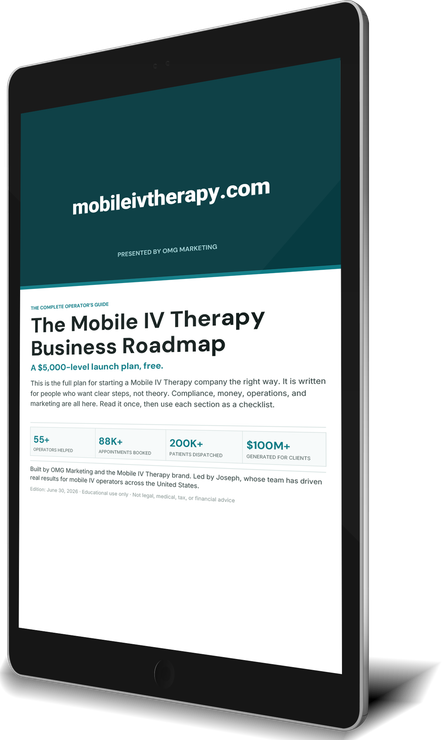
Or grab the Free Startup Roadmap — we’ll email it to you instantly. 

Frequently Asked Questions

  • How much does it cost to start a mobile IV therapy business?

    Most operators start for $20,000–$50,000, though a lean solo launch can be done for $8,000–$25,000. That covers entity formation, your medical director retainer, insurance, supplies, a basic vehicle setup, software, and initial marketing. A franchise, by comparison, runs $142,000 to over $1.3 million (sources). 

  • Do I need a medical director?

    In almost every state, yes. A licensed MD or DO provides your standing orders, protocols, and clinical oversight. Expect a flat monthly retainer of roughly $500–$5,000 depending on involvement. Never pay them a percentage of revenue (The Drip Map). 

  • Can a nurse (or a non-doctor) own a mobile IV therapy business?

    It depends on your state. In CPOM states (California, Texas, New York, and others), a non-physician often cannot own the clinical entity — but you can own a management company (MSO) that partners with a physician-owned practice. In other states, a nurse or NP may be able to own the entity directly. Always confirm with a healthcare attorney (MedPath Compliance). 

  • LLC or PLLC for IV therapy?

    A standard LLC usually can’t legally deliver medical care. Most states require a PLLC (about 30 states) or a PC (California, Maryland) for the clinical side. A standard LLC can still work as your non-clinical management company in the MSO model (SmartAsset). 

  • What license do I need for a mobile IV business?

    At minimum: your business entity registration, a local business license, and — depending on the state — a health care clinic/facility license. You’ll also need proper insurance, medical waste disposal, and HIPAA compliance. Some states have specific requirements, so verify locally. 

  • Can paramedics run wellness IVs?

    In most states, no — paramedics generally aren’t authorized to administer elective wellness IV therapy outside of an EMS context. This is one of the most common and costly misconceptions in the industry. RNs and NPs are the standard. 

  • How much can a mobile IV business make?

    A single mature nurse-route generates roughly $340,000–$580,000 in annual revenue, and a solo nurse-owner typically takes home $70,000–$120,000+ after costs. Margins on supplies run 70–92%, with net operating margins of 20–40% (sources). 

  • How long until I get my first customer?

    Realistically 2–6 months from idea to first paying appointment, and Year 1 is a real, full-time effort. This is a business, not passive income — but it’s one with unusually strong economics for those who execute. 

  • Is this just for people in big cities?

    No. The biggest hubs (Vegas, Scottsdale, Miami, LA, Austin, Nashville) are proven but crowded. The industry is fragmented, and many mid-size markets have little real competition — often the better opportunity. 

You have the map. Now come build it with us. 

The mobile IV industry is growing over 10% a year, the margins are real, and your city has room. The only thing between you and a profitable business is execution — and a community of people who’ve already done it. 

*No credit card. Free while we build it. Founding members get everything.* 

Disclaimer: This page is for educational and informational purposes only and does not constitute legal, medical, or financial advice. Laws and regulations for IV therapy vary significantly by state and change frequently. Always consult a licensed healthcare attorney and qualified medical professional in your jurisdiction before starting a mobile IV therapy business.